If you want to step up your tennis game and stay blister-free during a match, knowing how to find the best tennis socks for women, men, or children can give you an edge. With the right tennis socks, you can ensure your feet stay comfortable, cool, dry, and blister-free. As you search for the right tennis socks for you, take a moment to learn more about tennis dress codes for socks and how to find a great pair.
Do Youth Tennis Programs Have Uniform Requirements for Socks?
While there may be some exceptions, most youth and adult tennis leagues won’t have any specific requirements for socks. For example, the United States Tennis Association doesn’t have any requirements for socks on its site for youth tennis players. However, some tournaments may require players to wear socks in a certain color, such as white, or have restrictions about whether a manufacturer’s identification can be visible.
5 Tips for Finding the Best Tennis Socks
Since tennis players have lots of flexibility in the socks they can wear, they should be aware of a few tips that can help them narrow their search. There are a lot of options out there, and choosing the wrong socks could cause your feet to get too sweaty, slip around in your shoes, overheat, or develop a blister. Before you purchase any tennis socks, take a moment to review our following top five tips for finding the best tennis socks:
1. Avoid Cotton or Standard Wool
The first thing to look for in a pair of socks is the materials it was made out of, as some materials trap heat and absorb moisture. For example, cotton and standard wool tend to trap heat, cause feet to sweat more, and absorb moisture, which is a perfect recipe for discomfort and blisters. Instead of these materials, go with socks made primarily out of recycled polyester and/or Merino wool. Both materials excel at wicking away moisture, and Merino wool is far more breathable, temperature-regulating, and comfortable than standard wool.
2. Pick a Pair of Socks That Fit Well
When you put on a pair of tennis socks, they shouldn’t be too loose or too tight. When socks are too small, they can be uncomfortable and restrict your blood flow. Loose socks aren’t recommended either, as they’ll slip down and could cause your feet to slide around in your shoes. Use a sizing chart to make sure a new pair of socks is in a size appropriate for your feet and will fit snugly without being constricting.
3. Pay Attention to Sock Length
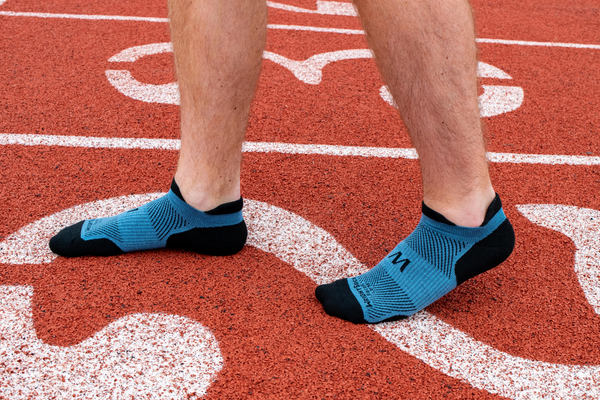
For the most part, the right sock length for tennis is up to personal preference or the season. For example, in the winter, you might want longer crew or over-the-calf socks for a little bit of extra protection from the cold, and in the summer, lo-quarter or quarter socks tend to be better due to their shorter length. Ankle socks can work as well, but make sure they have a tab on the back of the heel to stop the socks from slipping into your shoes.
4. Choose Socks in a Color Matching Your Court
When you’re picking socks, going with your favorite color or one that matches your shoes is usually great, especially if you normally play on hard courts. However, you might want to consider a darker-colored sock if you regularly play on clay. The reason to wear darker-colored socks on clay is that this type of court tends to get socks dirty fairly quickly, and a lighter-colored sock will make stains more noticeable.
5. Go With an Anti-Blister Design
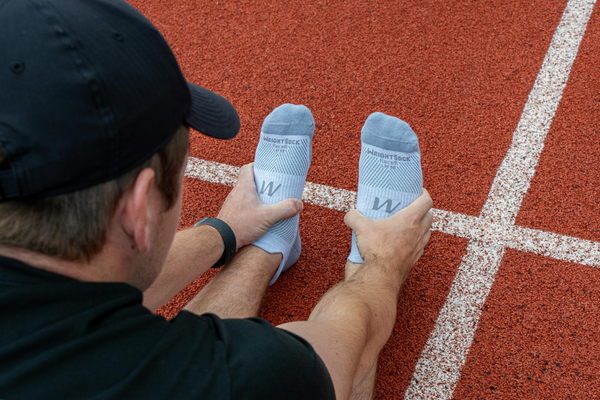
If you struggle with blisters while playing tennis, you’ll want to consider purchasing double-layer tennis socks for men and women. These socks feature two layers that interact with one another to prevent the three main causes of blisters—heat, moisture, and friction. The inner layer of a double-layer sock features a hydroponic yarn that wicks away moisture and keeps your feet cool while the outer layer absorbs friction. As a result, you’ll receive complete blister protection and won’t be distracted by one while you’re trying to focus on a match.
Find Your Next Favorite Pair of Tennis Socks at Wrightsock
When you need youth, men's, or women’s tennis socks, Wrightsock has you covered. We’re proud to offer a diverse selection of double-layer socks that offer top-tier performance and complete blister protection (we even back all of our double-layer socks with a blister-free guarantee!). Alongside designing our socks to protect our customers from blisters, we always use moisture-wicking and durable materials, like Merino wool and recycled polyester, to ensure you remain comfortable while you play.
Review our full selection of tennis socks today. If you have any questions, please contact us.