Sock length affects friction points, moisture control, and blister risk during every run. The right sock length should help keep your feet more protected while balancing performance and comfort in the rest of your running gear.
For example, quarter and crew socks deliver the best balance of coverage and breathability for most runners, but shorter options work in heat while taller socks protect against cold and trail debris. This guide will help you choose the best length for performance running socks based on terrain, weather, footwear, and more.
Why Sock Length Matters for Running
Sock height determines whether the cuff covers common rubbing zones such as the heel collar, ankle bone, and Achilles.
To understand what running socks are, it's important to know how they differ from everyday cotton options in several critical ways.
- Moisture-wicking fabrics pull sweat away from skin, while cotton absorbs and holds it against your foot
- Dry skin advantage: Moist skin produces higher frictional forces than dry skin, increasing blister risk1
- Snug, seamless fit reduces movement inside the shoe, cutting down on friction
The best options don’t just cover friction zones, they provide a snug fit, better arch support, and help keep feet dry by wicking sweat away before it builds up. Quarter and crew socks are often the most versatile choice because they combine coverage with a more secure fit and a lower risk of blisters.
How Sock Length Affects Comfort and Protection
Your heel, ankle bone, and Achilles tendon take the most abuse from shoe collars rubbing repeatedly. Taller socks shield these areas from direct contact.
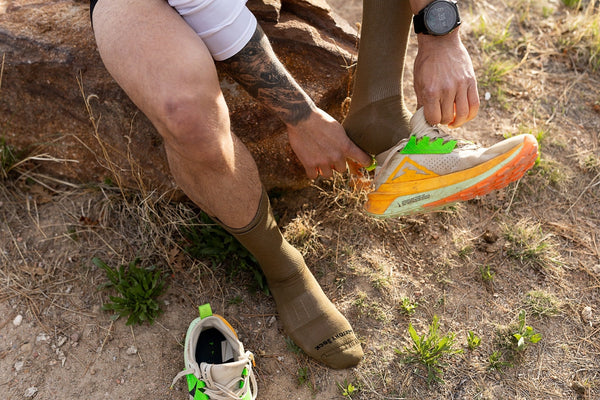
On trails, extra height keeps dirt and small rocks from falling into your shoes. In warmer conditions, shorter socks allow more airflow.
Sock Length and Blister Prevention
Blisters develop when skin rubs against your shoe hundreds or thousands of times per mile, making proper sock length a crucial step to prevent foot blisters. The longer you run, the greater your friction damage risk.
Our double layer socks address this at the source. Two layers move against each other instead of against your skin, absorbing friction before it reaches your foot. Learning more about how to prevent blisters while running can explain how anti-blister running socks are built with this technology.

Common Running Sock Lengths Explained
Running socks come in a surprisingly wide range, from no-show and ankle styles to mini crew, micro crew, quarter crew socks, and full crew-length options. There isn’t one perfect answer to long or short, the best choice depends on coverage, friction points, and the conditions you run in. Understanding whether running socks make a difference starts with knowing the five main sock heights:
No-Show Socks
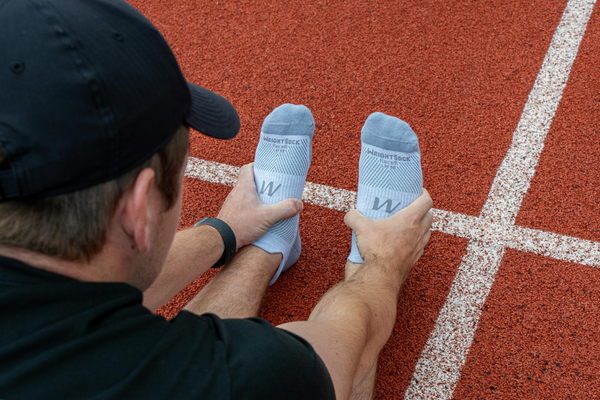
These low-cut socks sit entirely below the shoe collar. No-show options offer maximum ventilation but leave the ankle and Achilles exposed. A heel tab is one of the most effective ways to keep low-cut socks from slipping during longer efforts.
Ankle Socks
Ankle socks rise just above the ankle bone, protecting the Achilles from shoe collar irritation. This height remains popular for warm-weather training and everyday runs.
Quarter Socks
Quarter socks extend two to four inches above your shoe. Many runners consider this the most versatile option because quarter socks balance coverage with breathability.
Crew Socks
When comparing crew socks vs ankle socks, crew options reach the lower calf, providing maximum coverage among standard running sock heights. They work well for trail running and cooler weather, offering additional cushioning for runners who prefer extra protection.
Compression and Knee-High Socks
Compression socks apply graduated compression from ankle to calf, which can offer extra support, light muscle support, and a more secure feel through the lower leg. Some long-distance runners or even the occasional marathoner like that additional support for recovery or longer efforts, though most everyday runners still prefer quarter or crew heights for regular training.
What Is the Best Sock Length for Different Types of Running
No single sock height works for every situation, so matching length to your activity delivers the best results.
Best Sock Length for Road Running
Ankle and quarter heights handle most road sessions well. Smooth pavement requires less debris protection, making lightweight, breathable socks practical.
Best Sock Length for Trail Running
For a trail runner, the right sock length usually means more coverage and better debris protection than standard road socks for running. Quarter and crew socks earn recommendations for trails, making height a key factor when deciding what socks to wear with trail running shoes.
Best Sock Length for Hot Weather Running
Shorter socks maximize airflow when temperatures climb, which helps keep feet cool while running. Quarter socks still make sense if your shoes chafe near the ankle.
Best Sock Length for Cold Weather Running
Crew socks insulate exposed skin in colder months. Merino wool blends excel at temperature regulation while wicking moisture.
Best Sock Length for Long Runs and Races
Long efforts demand more stability, and the right mix of cushioning and support can help reduce fatigue over time. Long efforts also make sock stability more important because shifting fabric can create new hot spots. When selecting the best socks for marathons or long-distance runs, athletes benefit from quarter or crew heights combined with friction-reducing construction to protect feet over extended distances.

How to Choose the Right Running Sock Length for You
Three practical factors help narrow down which sock height fits your running routine:
Consider Your Running Environment
Match coverage to conditions:
- Trails and cold weather: Call for more protection with taller socks
- Roads and heat: Favor shorter options for maximum breathability
- Versatility strategy: Own multiple heights to rotate based on each day's plan
Think About Shoe Fit and Friction Points
Higher shoe collars may require taller socks to prevent rubbing. If you consistently develop hot spots in a specific area, choose a height that covers that zone, since blisters result from friction, rubbing, or pressure on one spot, targeted coverage can make a meaningful difference.2
Prioritize Performance Over Style
Comfort and blister prevention matter more than appearance. Understanding what socks to wear with running shoes means prioritizing construction and height over trends. Wrightsock supports durability and performance with made-in-the-USA socks, Double Layer anti-blister construction, and designs built for running.
Find Your Ideal Running Sock Length with Wrightsock
Your ideal height should cover the areas your shoes tend to rub, and double layer socks can add friction-reducing protection at that chosen height. Paired with the friction-reducing construction of double layer socks, the right height enhances your running experience mile after mile.
Wrightsock builds every sock with Double Layer anti-blister technology, moisture management, and durable construction, made in the USA by a family-owned company. Explore performance running socks or browse men's and women's socks to find the sock that fits your running routine.
Sources:
- UpToDate. Friction blisters. https://www.uptodate.com/contents/friction-blisters.
- MedlinePlus. Blisters. https://medlineplus.gov/blisters.html.