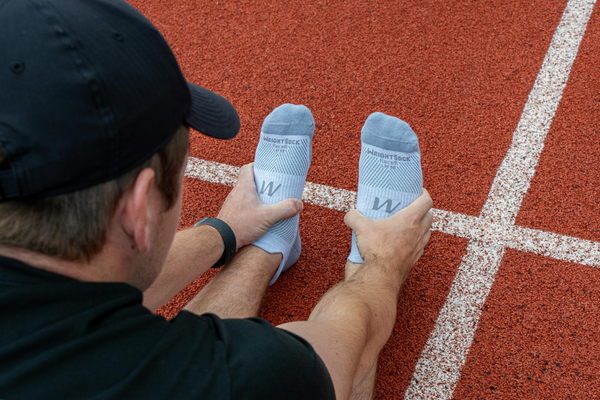
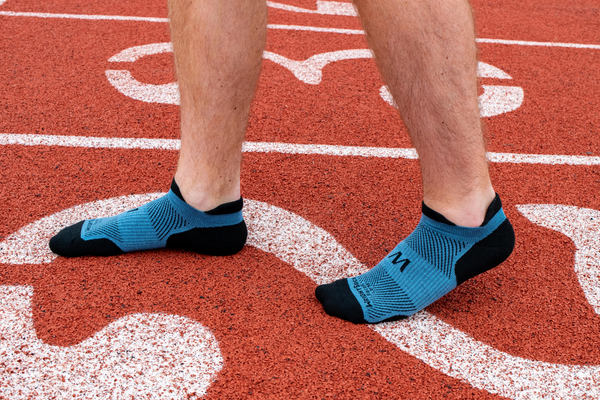
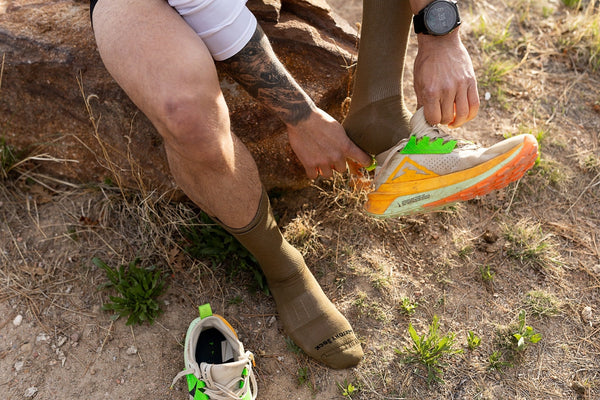
Running socks are specialized athletic socks built to help your feet stay drier, feel better, and handle the rubbing and pressure that come with running. Unlike everyday cotton socks, they’re made for repetitive impact, shifting movement, and the steady buildup of heat and sweat during training.
They’re a small piece of gear, but they pull more weight than people think. Just like running shoes, the right running sock can help reduce hot spots, improve comfort, and support better performance from your first mile to your longest effort. That’s why many runners start with performance running socks when they want a practical upgrade that actually improves the run.
How Running Socks Differ From Regular Socks
At a glance, one sock can look a lot like another, but socks aren’t all built the same. On the run, the difference is hard to miss. Regular socks often hold moisture, bunch up, and create friction inside your shoes. A quality pair of running socks is built to solve those problems before they turn into discomfort. The humble sock has come a long way, and today’s sock brands show just how differently performance socks are engineered.
Moisture-Wicking Materials
Most high-quality running socks use technical fabrics such as polyester, nylon, elastane, or merino wool. These materials improve wicking because the fabric wicks moisture away from your skin instead of soaking it up and staying damp. That helps keep your feet dry, improves moisture management, and lowers the risk of a painful blister forming over time.1
Blends like polyester and nylon are especially common because they’re lightweight, durable, and quick-drying. Many performance socks are made to pull sweat away from the foot, not trap it against the skin. Some runners also like wool socks or merino wool blends because they regulate temperature well and can help keep feet cool and dry in changing conditions.
By contrast, cotton socks tend to trap moisture, which can increase rubbing, chafe, and irritation over the course of a run. In other words, these are the kinds of socks to keep you drier, more comfortable, and more blister-free when mileage starts to build. Performance socks also dry faster than cotton, which makes a real difference over time.
A Snug, Performance Fit
A good running sock should feel snug, but not restrictive. That secure fit helps reduce bunching, slip, and slippage, all of which can lead to blisters during longer efforts. Many styles include light compression, targeted stretch zones, or built-in arch support to help stabilize the foot.
You’ll also see features like a deep heel pocket, a supportive heel cup, and shaping through the arch and ankle. Some designs use left and right foot-specific shaping, which helps the sock follow the foot more naturally while still providing a snug fit.
When socks fit well, they stay put, feel smoother inside your shoe, and create a more comfortable fit from start to finish. The perfect pair should feel secure through the midfoot while still giving your toes room to splay naturally.
Targeted Cushioning
Not every runner wants the same feel underfoot. Some prefer a low-profile sock for speed, while others want more cushion to soften repetitive impact. The best cushioned socks usually place support under the heel and forefoot, where runners need it most.
That extra protection can come from strategic padding rather than bulk. A little extra padding in the heel or forefoot can make a noticeable difference, especially if you’re training in a firmer running shoe or covering more miles than usual.2
Key Features of High-Quality Running Socks
The best running socks combine thoughtful materials with thoughtful construction. Breathable mesh zones help release heat, while seamless construction or a flat seam near the toe area helps reduce friction in one of the most sensitive spots on the foot.
Other features worth looking for include reinforced heel and toe zones for durability, plus support through the arch for a more stable ride. Heights matter, too. Some runners prefer no-show or no-show socks for a minimal feel, while others like ankle or crew socks for extra coverage and protection. Our running sock features prove how these details affect performance.

Do Running Socks Actually Matter?
Yes, running socks do make a difference. Running is repetitive, and small irritations rarely stay small for long. Poor socks can trap moisture, create friction, and leave your feet feeling overheated or raw halfway through the workout.3
Better socks help:
-
Keep your feet cooler and drier
-
Reduce hot spots and rubbing
-
Support blister-free comfort
-
Improve overall moisture management
Those gains may seem subtle at first, but they add up fast, especially during longer runs.
Choosing the Right Running Socks for Your Training
The right running socks depend on how you train, how much coverage you like, and what kind of support feels best.
Sock Height Options
Sock height affects both comfort and function.
-
No-show socks feel light and minimal.
-
Ankle socks offer a bit more protection without much added bulk.
-
Crew socks provide more coverage and can help keep dirt and debris off your skin on mixed terrain.
-
Higher styles, including compression socks, may also improve circulation for some runners during recovery or long training blocks.
Socks for Different Types of Runs
Different runs call for different features. Lightweight socks often work well for speed sessions or warmer weather. Moderate cushioning suits everyday training, while extra support and durability become more important for marathon prep or trail running.
If you’re logging serious mileage, long-distance running socks may offer a better match than a stripped-down race-day style. And if your routine includes both daily miles and casual movement, socks for running and walking can provide a more versatile option.
Running Socks vs Other Athletic Socks
Not all athletic socks are built for the same job. Running socks prioritize moisture control, friction reduction, and comfort inside your shoe. Hiking socks often focus more on warmth and durability, while general training socks may offer padding without the same breathable feel.
That’s why the best running socks tend to perform differently from gym socks or basic all-purpose pairs. It’s also why runners often compare performance-focused sock brands when deciding what features matter most.
Some runners may like cushioned options, while others prioritize blister prevention, fit, or double-layer construction. Our comparison and offering of running vs hiking socks is helpful if you want a clearer breakdown.

Are Running Socks Worth It for New Runners?
Usually, yes. If you’re weighing the value, a quality pair of running socks are worth it as a relatively small gear upgrade, with the ability to improve comfort in a very real way. Better materials help wick away sweat, better fit helps reduce irritation, and better construction supports a smoother run overall.
They also tend to outlast basic socks, especially when made from durable fibers like polyester and nylon.
What Socks to Wear With Running Shoes
Socks and shoes should work together, not compete with each other. Even a strong running shoe can feel off if the sock is too thick, too loose, or too warm. When deciding what socks to wear with running shoes, consider that material, height, and cushioning all affect how the sock feels inside your shoe and how well it complements the fit of the shoe itself.
A lightweight sock often pairs well with responsive trainers, while more cushioned options may feel better with higher-mileage shoes.
Finding the Right Running Socks for Comfort and Performance
The best performance running socks manage moisture, reduce friction, and stay comfortable mile after mile. Wrightsock fits those qualifications with a double-layer design that helps reduce rubbing between fabric layers instead of against your skin.
That construction can help runners prevent blisters, improve moisture management, and stay more comfortable during everyday training and longer runs. For runners exploring options for different conditions and preferences, Our collection of men’s and women’s socks offers styles built for comfort, performance, and staying dry on the move.
Sources
-
Cleveland Clinic Health Essentials. 5 Ways To Avoid Blisters (and the Best Way To Treat Them).
https://health.clevelandclinic.org/5-ways-to-avoid-blisters-and-the-best-ways-treat-them -
Materials (MDPI). Cushioning Performance of Specialized Running Socks for Enhanced Shock Absorption and Reduced Plantar Pressure.
https://www.mdpi.com/1996-1944/18/13/2941 -
Mayo Clinic. Blisters: First aid.
https://www.mayoclinic.org/first-aid/first-aid-blisters/basics/art-20056691