In the world of horseback riding, every detail is important. From the grip of your saddle to the fit of your boots, riders want to make sure that every piece of their equipment will help them have a more comfortable ride or gain an edge on the competition. While socks are often an overlooked part of horseback riding, knowing how to properly pick a pair of socks to wear with riding boots can significantly improve your riding experience.
How to Choose the Best Socks for Horseback Riding
Riders may be inclined to grab any pair of socks before heading to the stables. However, investing in high-quality socks will offer you comfort, support, and performance benefits that will enhance your riding experience. As you look for the best pair of socks to wear with riding boots, review the four main features to look for in horseback riding socks below:
1. Moisture Wicking Material
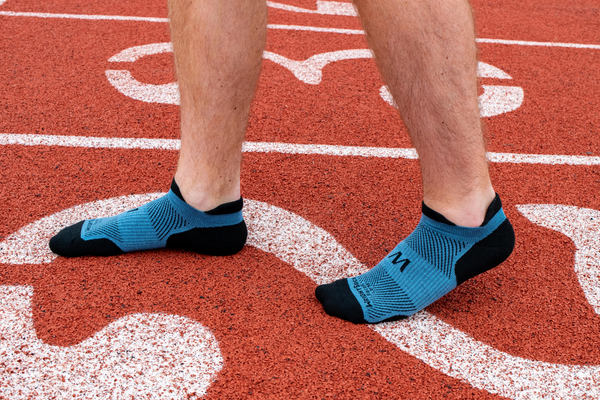
A good riding sock should be made of materials that provide moisture-wicking. Sweaty feet can lead to blister issues, and blisters are the last thing you want popping up when you’re out for a ride. Due to the need for moisture-wicking riding socks, you’ll likely want to pick one made with Merino wool, as this type of wool keeps perspiration off the skin.
Merino wool lined socks that feature synthetic yarns are also a good choice, as they offer greater breathability that reduces perspiration. If you’re worried that Merino wool will overheat your feet in warm weather, you should know Merino wool is much more breathable than regular wool. Cold-weather riders don’t need to worry either, as socks made completely of merino wool excel at keeping your feet warm while also wicking sweat away from your feet.
2. Cushioning and Padding
Long hours in the saddle can take a toll on your feet, so you want to make sure that the socks you’re wearing have strategically placed padding in order to not get any blisters. The heel and the ball of the foot are areas that you’ll want to pay particular attention to. If you choose a sock with more support in those areas, you’ll reduce the amount of strain on your feet and have a more enjoyable riding experience.
3. Compression Support
If you’re going to be spending long hours in the saddle, compression support is a key component that you’ll want to make sure your socks have. Compression can enhance circulation and keep your muscles from getting fatigued, meaning you can stay out on the ride longer without discomfort!
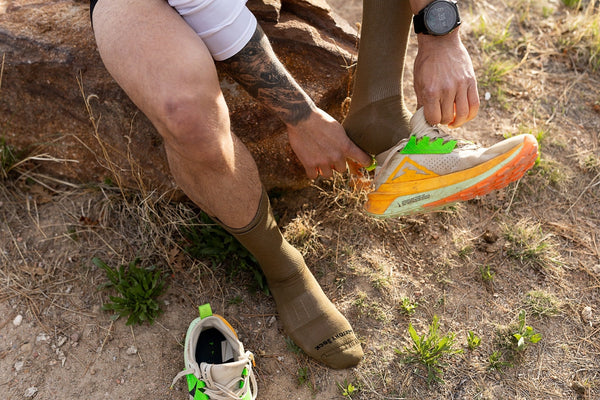
Socks that come up higher onto your calves are a good choice, as they’ll offer the most coverage of your leg muscles while still being a length that won’t get your legs too hot. Since riding boots tend to go past the calves, wearing a longer pair of socks can also be a great way to reduce friction between your legs and the boots.
4. Double-Layer Design
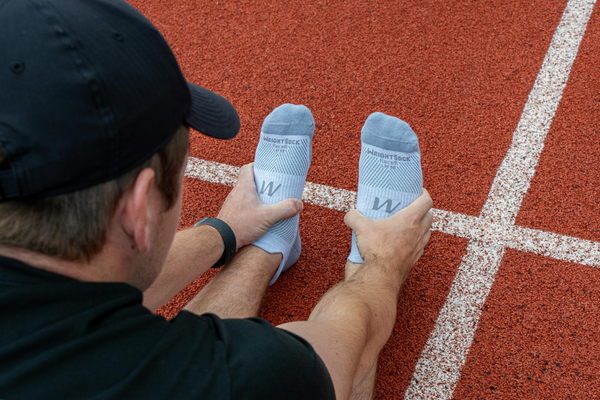
When you wear a pair of socks with only a single layer, you’re more likely to develop blisters and have an uncomfortable time while on a ride. Instead of wearing a second pair of socks, you’ll want to look for socks featuring a double-layer design. These types of socks excel at eliminating the three main causes of blisters: excessive moisture, heat, and friction.
Since horseback riding can produce a great deal of moisture, heat, and friction, a pair of socks that targets these main causes of blisters is a must. A great pair of double-layer socks will feature an inner sock that uses hydrophobic yarn that quickly wicks away moisture and cools your foot. It should also feature an outer layer that interacts with the inner layer to absorb friction before it can wear away at your skin.
The inner layer of the sock is made with a hydrophobic yarn that wicks away moisture and keeps it away from your skin. The wicking away of moisture also helps double-layer socks function as cooling socks to prevent blisters, as moisture-wicking causes a cooling process that reduces heat.
Wrightsock: Anti-Blister Horseback Riding Socks
The next time you’re thinking about picking up some gear for yourself or the horseback rider in your life, choose Wrightsock for double-layer riding socks. We offer a wide selection of anti-blister socks designed for all different types of environments. Whether you’re taking your horse out in the winter or summer, we have a pair of socks to keep you comfortable. Our double-layer socks are also backed by our No Blister Guarantee, which guarantees you’ll receive your full money back if you get a blister while wearing them.
Browse our selection of double-layer socks today. We have selections for all ages, so if you were looking to take your family out for a ride, there are options for the kids as well! If you have any questions or want help choosing a pair, please contact us.