Mountain Biking is a sport where every piece of gear impacts your performance. From your helmet to your bike itself, making sure that you’re comfortable and kitted out with equipment that will improve your ride is necessary for a fun (and safe!) experience out on the trails.
One piece of equipment that’s often overlooked in mountain biking, and many sports in general, is a good pair of socks. You use your feet constantly in mountain biking, and without proper socks, you could develop uncomfortable blisters that will keep you off your bike until they’re healed.
If you’re looking for guidance about what socks to wear mountain biking, take a moment to learn more about the main qualities to look for in mountain biking socks.
What to Look for in Mountain Biking Socks
While you search for the perfect pair of mountain biking socks, you should be checking what materials they’re made from, their length, and the amount of cushioning they provide. Learn more about each of these qualities below:
-
Quality Material: A good mountain biking sock will be made of material that is both moisture-wicking and breathable. A combination of synthetic materials like polyester and nylon are the best types of materials for biking in the summer, and Merino wool is a good choice for the cooler months. Polyester will provide some stretch to your socks while still giving you the support you need, and Merino wool will keep your feet warm without getting sweaty.
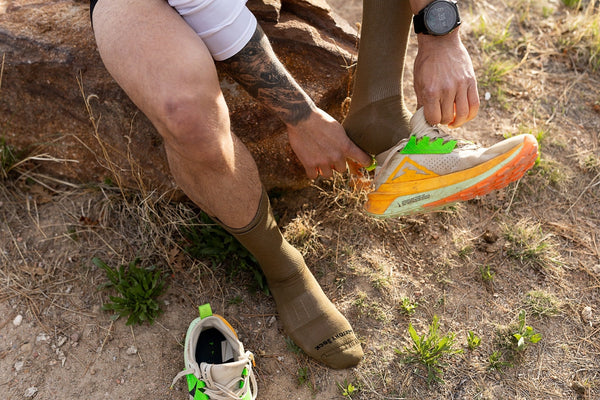
- Length: Long socks for mountain biking are your best bet to protect your shins and calves from debris that may be kicked up while you’re riding. Longer mountain biking socks are also great for keeping you warmer in the cooler months, and they can improve circulation to reduce the chance your legs get tired quickly.
- Cushioning & Support: Because mountain biking is a high-impact sport, socks with extra cushioning and support are essential. For example, a pair of double-layer sports socks is an awesome choice for mountain bikers who are blister-prone and want to have that extra layer of protection on their feet. The added layer also helps prevent bruising and foot pain after a long day on the trails.
What to Avoid with Mountain Biking Socks
Alongside knowing the main qualities to look for in mountain biking socks, you should know what to avoid. While you shop for mountain biking socks, make sure they don’t have any of the following qualities:
- Cotton Socks: Cotton retains moisture and can potentially lead to blisters on your feet. Even if you don’t get a blister while wearing cotton socks, they’ll trap moisture and heat in your shoes, which can make for an uncomfortable ride.
- Poor Quality: Cheaply made socks will not only potentially lead to blisters but also break down faster. Since mountain biking can be hard on your feet, you don’t want to have to deal with a never-ending cycle of blisters. Plus, having to buy a new pair of socks over and over again can make your bank account take a hit. As a result, you’ll want to invest in American-made socks from a trusted manufacturer.
- Lack of Elasticity: Socks that don’t have any stretch to them can bunch, slip down your leg, and cause pressure points. All of these effects can lead to blisters and discomfort while riding. If you want to stay focused on your ride, it’s best to invest in a pair of socks that have a little stretch to them.
Wrightsock: Anti-Blister Mountain Biking Socks
Wrightsock offers a wide range of double-layer socks manufactured to the highest standard and designed to eliminate the three main causes of blisters—heat, friction, and excess moisture. Our double-layer Coolmesh II Over the Calf Socks are perfect for riders as they offer comfort, breathability, a knee-high length, and protection from blisters.
Review our full selection of cycling socks today. If you have any questions or want help choosing a pair, please contact us. Our double-layer socks also have a No Blister Guarantee, meaning we’ll give you your money back if you get a blister while wearing them.